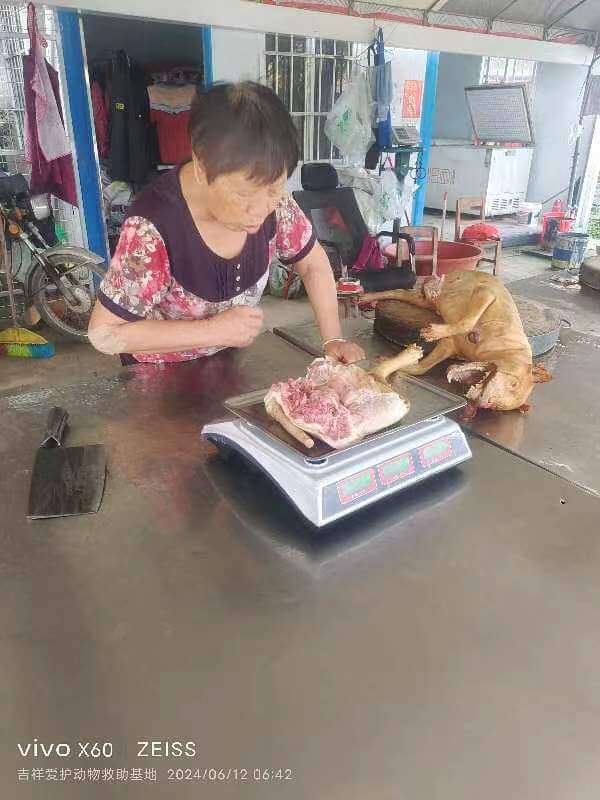
The annual Yulin dog meat festival is infamous, but what is less well known is that dogs are tortured and eaten in China all year round.
It is estimated that, in China alone, between 10 and 15 million dogs are eaten annually and some put the figure at 50,000 per day. Between four and five million cats are estimated to be killed for food.
Far from dying out, the dog and cat meat trade is a thriving, highly profitable industry.
A strong network of greedy restauranteurs, meat dealers, and butchers who have convinced the public that eating dog and cat meat is healthy and fashionable.
We estimate that, worldwide, as many as 30 million dogs are eaten each year. The fur of slaughtered dogs and cats is also sold and the animals are also killed to be used in tinctures or elixirs that are sold for health ailments or as tonics.
Many of the dogs who are brutally slaughtered have been raised on dirty farms where they are pumped full of harmful antibiotics. They can carry diseases such as rabies, avian flu, and brucellosis.
In Indonesia, dogs are burnt alive in open markets just minutes from tourist attractions. This epidemic of cruelty, which extends throughout Asia and beyond, has no place in any modern society.
In Korea, dogs are beaten and blowtorched while still alive and, in Vietnam, cats are boiled alive to make soups and elixirs.
There is an awful belief in some countries that stimulating as much adrenaline as possible through an animal’s body before death will make the meat more tasty and healthy.
The malicious practices committed in the dog and cat meat trade include ‘tenderising’ the animal before it is killed, for example by bludgeoning. The dogs and cats also suffer hanging, drowning, suffocation, stabbing, electrocution, burning, blowtorching, boiling, and being skinned alive.
The animals’ suffering worsens even more when they are forced to watch the horrors being inflicted on other animals before it is their turn to be slaughtered.
Journeys of horror
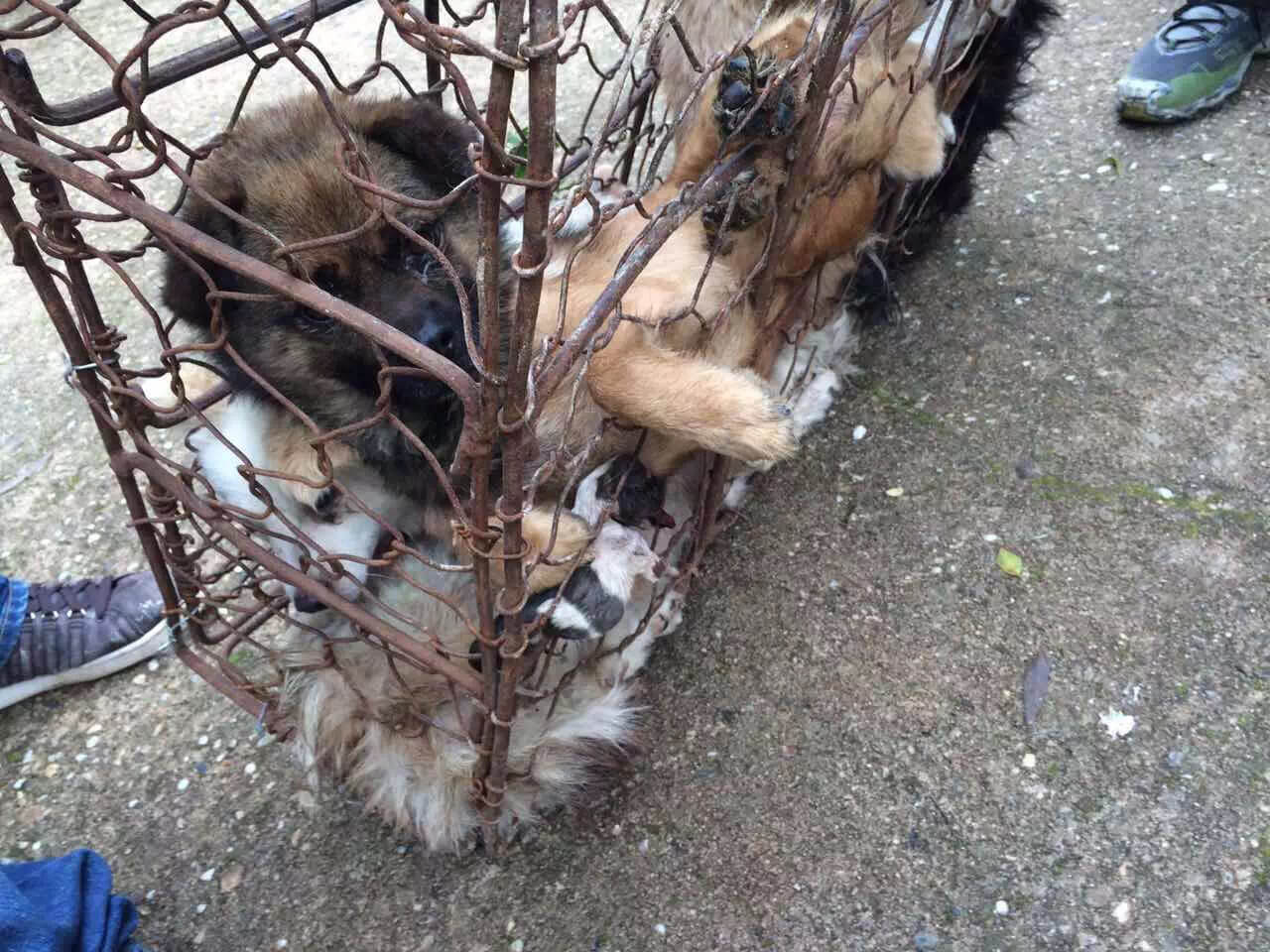
The dogs and cats are often transported for long distances, crammed into cages so small they cannot move. They are often deprived of food and water on journeys that can take days.
Most of the dogs are very ill with such injuries as broken legs and open wounds. Diseases such as distemper, parvovirus, and sometimes rabies spread quickly. Many of the animals die during the journey or soon after.
Depending on the country, many dogs that end up in the markets are raised specifically for their meat, while others are strays or stolen pets.
Some are still wearing their collars and tags as they are crammed with dozens of other animals into small wire cages. As many as 25 dogs are packed into one cage.
Traffickers then sell the animals to slaughterhouses.
Most dog meat dealers and butchers work in criminal circles and are often members of underground gangs.
‘Puppies regarded as a delicacy’
Any breed of dog can end up in the dog meat trade, in which puppies are regarded as a delicacy.
The stolen pets include purebred dogs such as Cocker Spaniels, Poodles, Maltese Terriers, Labradors, Shih Tzus, Lhasa Apsos, Schnauzers, Collies, Beagles, Great Danes, Greyhounds, and Saint Bernards.
Dogs from puppy mills and shelters, farmed dogs, dogs trafficked from police pounds, and dogs sold at closed dog auctions.
Some people defend eating dog and cat meat as a person’s right to follow the ‘cultural tradition’ in their country.
However, throughout history, numerous cruel practices have been banned as societies became more civilised and compassionate.
There is no place for the cruelty of the dog and cat meat trade in our society.